
Introduction
In today’s digital world, protecting personal data is more important than ever. GDPR, short for the General Data Protection Regulation, is a law that ensures organizations handle personal data responsibly and transparently. Whether you are a small business owner, a website manager, or just someone handling customer information, understanding GDPR is essential. Many organizations struggle with GDPR compliance because it seems complex and technical, but it can be broken down into simple steps that anyone can follow.
This GDPR compliance guide is designed for beginners and intermediate users. We will explain the rules clearly, show why compliance matters, and provide actionable steps to implement GDPR in your business. By following this guide, you will not only protect your customers’ data but also build trust, improve your reputation, and avoid heavy fines. Whether your business is online or offline, GDPR applies if you deal with personal data of individuals in the European Union.
What is GDPR?
GDPR stands for General Data Protection Regulation. It is a legal framework established by the European Union in 2018 to protect the personal data and privacy of individuals. The regulation applies to all businesses and organizations that collect, store, or process personal information of EU residents, regardless of where the business is located.
Personal data can include names, email addresses, phone numbers, IP addresses, or any information that can identify an individual. GDPR sets rules on how this data should be collected, stored, used, and shared. Organizations must be transparent about data processing and provide individuals with rights such as access to their data, the ability to correct inaccuracies, or even request deletion.
GDPR is not just a legal requirement; it represents a shift in how data privacy is treated globally. Businesses must adopt policies, procedures, and systems to ensure they comply. Failure to do so can result in significant fines and reputational damage.
Why is GDPR Important?
GDPR is important for several reasons:
- Protects Personal Privacy: Individuals have more control over how their personal data is used.
- Builds Trust: Customers are more likely to trust businesses that respect their privacy.
- Avoids Heavy Penalties: Non-compliance can result in fines up to €20 million or 4% of global annual revenue.
- Improves Data Management: Encourages businesses to organize, secure, and reduce unnecessary data storage.
- Global Impact: Even non-EU businesses must comply if they handle EU residents’ data, making it relevant worldwide.
In short, GDPR ensures ethical and responsible handling of personal data, which is essential in today’s data-driven world.
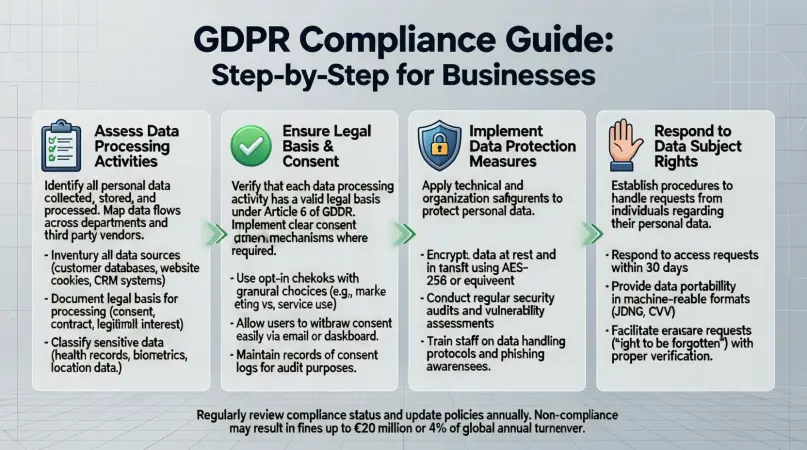
Detailed Step-by-Step Guide to GDPR Compliance
Step 1: Understand Your Data
Before implementing GDPR, know what personal data you collect. This includes:
- Customer names, emails, phone numbers
- Payment details
- IP addresses and browsing behavior
- Employee information
Create a data inventory to track what data you have, where it is stored, and how it is used.
Step 2: Assign Responsibility
GDPR requires that businesses designate a Data Protection Officer (DPO) if necessary. Even if you are a small business, someone should be responsible for overseeing data protection. Responsibilities include:
- Ensuring GDPR compliance
- Conducting audits and risk assessments
- Training employees on data handling
Step 3: Update Privacy Policies
Your privacy policy must be clear and transparent. Include:
- Types of data collected
- Purpose of data collection
- Legal basis for processing
- Data retention period
- Rights of individuals (access, deletion, correction)
Example: “We collect your email to send updates. You can unsubscribe anytime.”
Step 4: Obtain Proper Consent
Consent must be:
- Clear and specific
- Given voluntarily
- Easy to withdraw
Avoid pre-ticked boxes or vague statements. Use simple language like:
“I agree to receive marketing emails from [Your Company].”
Step 5: Ensure Data Security
Protect personal data with:
- Encryption
- Strong passwords and multi-factor authentication
- Secure servers
- Regular backups
Data breaches must be reported to authorities within 72 hours if they pose a risk to individuals.
Step 6: Implement Data Subject Rights
GDPR gives individuals rights over their data, including:
- Right to Access: Individuals can request a copy of their data.
- Right to Rectification: Correct inaccurate information.
- Right to Erasure: Request deletion of personal data (“right to be forgotten”).
- Right to Restrict Processing: Limit how data is used.
- Right to Data Portability: Move data between service providers.
- Right to Object: Opt out of marketing or automated decisions.
Create a simple process for handling these requests efficiently.
Step 7: Conduct Regular Audits
Regular audits help identify gaps in GDPR compliance. Check:
- Who has access to personal data
- Whether data is encrypted
- If consent is documented
- Data retention schedules
Update policies and procedures based on audit findings.
Step 8: Train Your Employees
Employees should understand:
- How to handle personal data
- Recognizing phishing or data breaches
- GDPR basics and company policies
Training reduces mistakes and ensures everyone follows proper procedures.
Step 9: Use GDPR-Compliant Tools
Choose tools and software that comply with GDPR, such as:
- Secure cloud storage
- Email marketing platforms with consent management
- Analytics tools with anonymization options
Always check their data processing agreements.
Step 10: Monitor and Update Compliance
GDPR compliance is ongoing. Monitor changes in regulations, new tools, and evolving business processes. Keep documentation updated to prove compliance in case of audits or inquiries.
Benefits of GDPR Compliance

- Enhances customer trust
- Reduces risk of data breaches
- Avoids financial penalties
- Improves business reputation
- Encourages better data management practices
- Supports global business expansion
Disadvantages / Risks
- Initial implementation can be costly
- Requires ongoing monitoring and resources
- Potential disruption in workflows
- Risk of fines if compliance fails
- Complexity for businesses handling large volumes of data
Common Mistakes to Avoid
- Assuming GDPR only applies to EU businesses
- Using vague consent forms
- Failing to update privacy policies regularly
- Ignoring employee training
- Not documenting compliance efforts
- Delaying breach reporting
- Overcollecting unnecessary personal data
FAQs
1. Does GDPR apply to small businesses?
Yes. Any organization handling EU residents’ personal data must comply, regardless of size.
2. How long can I keep personal data?
Only as long as necessary for the purpose it was collected. Set retention policies and delete outdated data.
3. Can I transfer data outside the EU?
Yes, but ensure the destination country has adequate data protection or use legal safeguards like Standard Contractual Clauses.
4. What happens if I violate GDPR?
Penalties can reach up to €20 million or 4% of global annual revenue, depending on severity.
5. How do I get consent under GDPR?
Consent must be explicit, informed, and easily withdrawn. Avoid pre-ticked boxes and vague language.
6. Do employees’ personal data fall under GDPR?
Yes, employee data like names, addresses, and payroll information are also protected under GDPR.
7. How often should I review GDPR compliance?
Regularly. At least annually or whenever you introduce new systems, processes, or collect new types of personal data.
8. Can I refuse a data subject request?
Only in limited situations, such as when legal obligations prevent it. Otherwise, comply promptly.
Expert Tips & Bonus Points
- Document Everything: Keep a detailed record of consent, processing activities, and audits.
- Minimize Data: Collect only what you need to reduce risks.
- Automate Compliance: Use GDPR-compliant software for consent and data management.
- Stay Informed: GDPR regulations can evolve; subscribe to updates from trusted sources.
- Third-Party Contracts: Ensure vendors and partners comply with GDPR through agreements.
- Regular Testing: Conduct security tests to identify vulnerabilities in your systems.
Conclusion
GDPR compliance may seem daunting at first, but it is achievable with proper planning and execution. By understanding what GDPR is, why it matters, and how to implement it step by step, you can protect personal data, build customer trust, and avoid costly fines.
Start by knowing your data, updating privacy policies, obtaining clear consent, securing data, and training your employees. Conduct regular audits and monitor compliance continuously. Avoid common mistakes, leverage expert tips, and make GDPR part of your company culture.